
Can Rotted Deck Posts Be Repaired, or Do They Need to Be Replaced?
A rotted deck support post usually needs more attention than a rotten deck board because the post is part of the structure carrying the deck. In some cases, the damaged post can be replaced while the rest of the deck stays in place. In others, what looks like one bad post turns out to involve the beam above it, the support below it, or additional framing nearby.
When we look at a rotted post, we are not trying to decide whether the damaged surface can be patched. We want to know how far the deterioration extends, whether the post is still carrying the load the way it should, and whether the wood above and below it is sound enough for a localized repair to make sense.
That is also why one rotten post does not automatically mean the whole deck has to be rebuilt. The decision depends on how much good structure remains around the problem.
A Deck Post Is Part of the Load-Bearing Structure
A support post carries weight from the beam above it down toward the footing or support beneath it. That makes deterioration in the post different from surface rot in a deck board or trim piece.
A small dark area on the outside of a post does not tell us how much strength has been lost. Rot can be concentrated near the surface, or it can extend deeper into the wood where it affects the section that is actually carrying the load. We also pay attention to where the deterioration is located because damage near the top or bottom of the post can affect important connections.
The bottom of a post is a common place to find problems because it is closer to splashback, soil, mulch, irrigation, and runoff. The top deserves just as much attention, especially around beam connections and hardware where water can sit against the wood.
Georgia’s heat, humidity, and heavy rain expose decks to a lot of moisture over time, but we still want to understand the water pattern on the individual deck rather than blame the climate alone. The Trusted Toolbox’s current deck repair page identifies moisture as one of the recurring causes behind deteriorated support posts and other framing problems around Metro Atlanta.
Sometimes the Post Is Not the Only Thing That Is Moving
A deck that is low, leaning, or uneven can look like it has a bad post even when the wood post itself is only part of the problem.
The support beneath the post may have moved. Hardware may have loosened or corroded. The connection between the beam and post may have shifted, or the beam itself may have deteriorated. From the deck surface, several of those conditions can feel like the same problem.
That is why we follow the load path instead of looking at the post by itself. We want to see how the beam bears on the post, how the post connects at the bottom, and whether the support beneath it appears stable. Replacing a deteriorated post without understanding what it is sitting on can leave the underlying support problem unresolved.
The opposite is true too. Correcting a support issue does not restore wood that has already lost strength to decay. If both conditions are present, both have to be considered in the repair plan.
What We Check Around a Rotted Deck Post
Before deciding whether the repair can stay localized, we look beyond the visible post. A structural member rarely works by itself, so the condition of the pieces connected to it matters.
We typically want to understand the condition of the post from top to bottom, the beam or girder above it, the post-to-beam connection, the base connection, nearby joists, visible hardware, and the support beneath the post. We also look for movement elsewhere in the deck because one low corner, several leaning posts, or a sagging beam can point to a larger structural issue.
This connects directly with our broader article on how to tell whether deck framing is still good. That inspection includes joists, beams, support posts, ledger areas, connections, and visible wood condition because one damaged piece has to be judged in the context of the remaining frame.
Moisture patterns matter as well. If one post is deteriorated because irrigation sprays the same area every day, that is a different situation from a deck where several posts, beam ends, and joists are showing the same decay. The second pattern tells us the repair may need to go farther.
One Bad Post Does Not Always Mean a Full Deck Rebuild
There are situations where the problem can remain fairly contained. If the surrounding beam and framing are sound, the support is stable, the damage is isolated, and the rest of the deck has enough useful life left, replacing the affected structural component may make more sense than rebuilding the entire deck.
That is the same principle we use with other deck repairs. Our current article on how much wood rot is too much to repair on a deck explains that the amount of sound structure remaining matters more than simply finding rot somewhere on the deck. An older deck with one localized problem can sometimes be a better repair candidate than a newer deck with deterioration across several structural members.
We do not want to replace more than is necessary, but a localized repair only makes sense when the new component will be supported by sound structure around it. If the beam above the post is already rotting, the connection is compromised, or other supports are showing the same problem, simply changing one post may not leave the deck in the condition we want.
That is where the scope starts to expand from a post repair into a larger deck repair.
When a Rotted Post Points to a Larger Structural Problem
A single post becomes more concerning when the damage is part of a broader pattern. Multiple soft or deteriorated posts, beam rot, movement in the deck, questionable connections, widespread moisture damage, or problems around the ledger can all change whether preserving the existing structure still makes sense.
For example, if the bottom of one post is soft but the beam, nearby framing, and other supports are solid, the repair conversation may stay focused on that area. If several posts are deteriorated and the beam above them is also losing sound wood, we have a different project.
The same applies when the support beneath the post is part of the problem. A post that appears to be sinking may actually be responding to movement below it rather than wood decay alone. We need to understand whether the issue is the wood, the support, or both before deciding how much of the deck should be disturbed.
This is why we do not use the age of the deck as the deciding factor. The condition of the structure in front of us matters more. The Trusted Toolbox’s deck guidance follows that same approach when deciding between targeted repair and broader replacement.
The Moisture Problem Has to Be Addressed Too
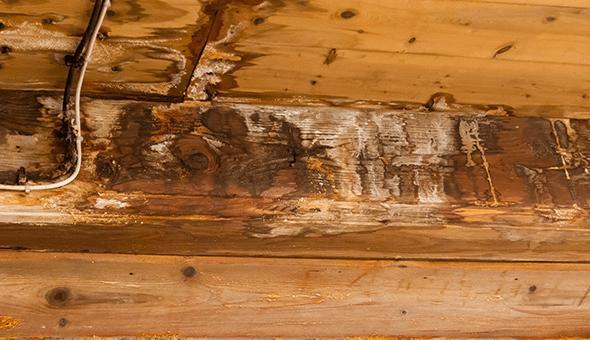
Replacing a rotten post without changing the condition that kept it wet can put the new wood into the same environment that damaged the old one.
We look for runoff, splashback, irrigation, soil or mulch contact, drainage around the post base, and areas where water repeatedly collects. Hardware and connection details can matter too if they are allowing water to sit against the wood instead of drying.
That is one reason deck repair and wood rot repair overlap so often. The Trusted Toolbox's wood rot approach includes identifying the moisture condition that allowed the damage to develop, not just removing the visibly deteriorated material.
Correcting the moisture source does not restore a post that has already lost structural strength, but it helps keep the same problem from repeating after the damaged material is repaired or replaced.
What Should You Do If a Deck Post Looks Rotten?
If you can see soft wood, dark deterioration, splitting, movement, or staining around a deck support post, it is worth having the post and the structure around it inspected before doing surface work elsewhere on the deck.
We want to know whether the damage is limited to that post, whether the beam and connections are still sound, whether the support beneath it is stable, and whether the moisture problem extends into other parts of the framing. Once we know that, we can tell whether the repair can stay localized or whether the deck needs a broader structural repair.
At The Trusted Toolbox, our deck repair work includes structural components such as joists, beams, and support posts, along with wood rot repair. Our goal is not to turn one bad post into a full rebuild if the rest of the structure is worth keeping, but we also do not want to treat a load-bearing problem like a cosmetic patch.
If a deck post around your Metro Atlanta home is soft, leaning, or visibly deteriorated, the next step is to find out what else that post is connected to before deciding how much repair the deck actually needs.