
How Much Wood Rot Is Too Much to Repair on a Deck?
A little wood rot does not always mean your deck needs to be replaced. At The Trusted Toolbox, we often find decks where the damage is limited to a few boards, a railing section, a stair component, or another isolated area. In those cases, targeted repair may make sense.
The bigger concern is what is happening underneath the surface. Once rot spreads into joists, beams, support posts, or other structural parts of the deck, the repair becomes more involved.
The question is not just how much rot you can see. It is whether the remaining structure is still solid enough to support a safe repair.
Surface Rot Is Different From Structural Rot
Deck boards take a lot of abuse from sun, rain, humidity, and foot traffic. It is common for older boards to crack, split, soften, or deteriorate before the framing underneath does. If the rot is limited to the walking surface, replacing the damaged boards may be enough. The same can be true for isolated railing parts, stair treads, or trim.
Structural rot is different. If joists, beams, support posts, stair stringers, or major connections are deteriorating, the deck may no longer have the same strength it once did. That does not automatically mean the entire deck has to be rebuilt, but it does mean we need to look beyond the visible surface damage.
This is why we inspect the framing before deciding how far the repair needs to go.
We Look at Where the Rot Is Located
The location of wood rot matters as much as the amount. A single damaged deck board is usually a smaller repair. A rotten joist end near the ledger, a soft support post, or decay at a beam connection can affect a much larger part of the structure.
Areas we pay close attention to include:
- Joist ends
- Beam connections
- Support posts
- Stair stringers
- Railing attachment points
- Ledger areas
- Places where water collects
- Sections that stay shaded or damp
Rot near a structural connection deserves more attention because that area may be carrying more load. We also want to know whether the damage is isolated or whether similar deterioration is showing up in several parts of the deck.
The Deck Can Look Better on Top Than It Does Underneath
One of the easiest mistakes to make is judging the condition of the deck only by the boards you walk on. We sometimes see decks where the surface looks fairly good, but the framing underneath has been exposed to moisture for years. Newer boards may even have been installed over older framing.
The opposite can happen too. The deck boards may look weathered while the joists, beams, and posts are still in good condition. That is why visible appearance alone does not tell us whether repair is still practical. We want to know what condition the structure is in before recommending new decking or other surface work.
When Wood Rot Can Usually Be Repaired
Targeted repair often makes sense when the deterioration is limited and the surrounding structure is still sound.
That might mean replacing:
- A few rotten deck boards
- One or two damaged joists
- A section of railing
- A stair tread or stringer
- An isolated support component
- Rotted trim or fascia around the deck
The important part is that the repair ties back into good material. If we remove the damaged wood and find solid framing around it, we may be able to replace that section without rebuilding the whole deck. This is where deck repair and wood rot repair overlap. The rot needs to be removed, but the deck also needs to remain properly supported afterward.
When Rot Starts Pointing Toward a Larger Repair
Repair becomes less practical when the deterioration is widespread. If several joists are soft, a beam is deteriorating, support posts are compromised, and multiple connection points are failing, replacing individual pieces may start to become a patchwork repair. At that point, we ask whether the remaining structure has enough useful life to justify rebuilding around it.
Other signs that the project may be larger include:
- Rot showing up across multiple sides of the deck
- Several framing members losing strength
- Widespread movement or sagging
- Loose railings caused by damaged framing
- Stairs pulling away from deteriorated supports
- Significant decay around the house connection
- Previous repairs failing in several places
There is no single percentage of rotten wood that automatically means replacement. The decision comes down to how much sound structure is left and whether the repaired deck would still be reliable.
Why the Cause of the Rot Matters
We do not just want to remove damaged wood. We want to understand why it deteriorated. Wood rot needs moisture. If water continues reaching the same area, the new material can eventually face the same problem.
We look for things like poor drainage, trapped debris, water running off the house, failed flashing, shaded areas that stay wet, and places where wood has prolonged contact with moisture.
A successful repair should address both the damaged material and the condition that allowed the rot to develop. Otherwise, the deck may look better for a while without actually solving the underlying problem.
What We Check Before Recommending Deck Repair
When we are trying to determine whether a rotted deck can still be repaired, we look at the entire structure.
| What We Check | Why It Matters |
|---|---|
| Deck boards | Shows whether damage is mainly at the surface |
| Joists | Helps determine whether the floor framing is still sound |
| Beams | Shows whether larger sections of the deck are properly supported |
| Support posts | Helps us evaluate vertical support |
| Ledger area | Checks the connection between the deck and the house |
| Stairs | Identifies rot in treads, stringers, and supports |
| Railings | Shows whether attachment points are still solid |
| Connections and hardware | Helps confirm the framing is securely tied together |
| Moisture patterns | Helps identify why the rot developed |
| Previous repairs | Shows whether the problem has already been patched before |
We are looking for the difference between an isolated repair and a pattern of deterioration. That distinction is what usually determines whether repair still makes sense.
Repairing Wood Rot Does Not Always Mean Rebuilding the Deck
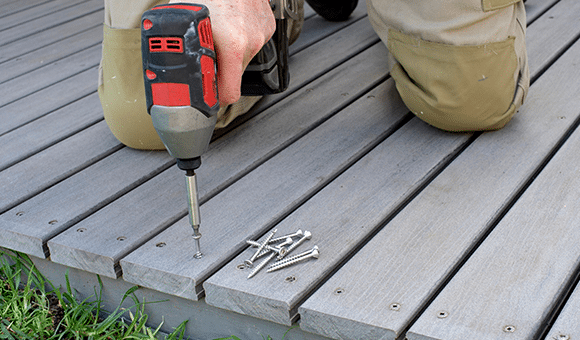
Homeowners sometimes assume that finding rot means the deck is done. That is not always the case. If most of the framing is still solid, replacing damaged sections may extend the useful life of the deck without the cost and disruption of a full replacement.
But we also do not want to cover structural rot with new boards or make cosmetic repairs to wood that can no longer provide proper support. The right repair should leave the deck stronger, not just better looking.
How Do We Decide When Replacement Makes More Sense?
Replacement becomes more reasonable when the amount of good structure left is small compared with the amount that needs repair.
If most of the joists are deteriorated, support posts are failing, beams are damaged, and connections are questionable, rebuilding may make more sense than trying to preserve pieces of an older structure.
Age matters too, but it is not the deciding factor by itself. An older deck with sound framing may still be a good repair candidate. A newer deck with widespread moisture damage may need more work than expected. We base the recommendation on the condition of the wood and structure in front of us.
Not Sure How Much Wood Rot Your Deck Has?
If you are seeing soft boards, loose railings, damaged stairs, or visible rot, the next step is to find out how far the deterioration has spread.
At The Trusted Toolbox, we handle both deck repair and wood rot repair throughout Metro Atlanta. We inspect the surface, framing, support posts, connections, and moisture patterns before recommending whether targeted repair or a larger rebuild makes more sense.
If the damage is limited, we will tell you what can reasonably be repaired. If the rot has spread into too much of the structure, we can explain why a larger repair may be the better option. The goal is not to replace more than necessary. It is to make sure the deck is repaired the right way.