
Why Do Exterior Door Frames Rot, and How Are They Repaired?
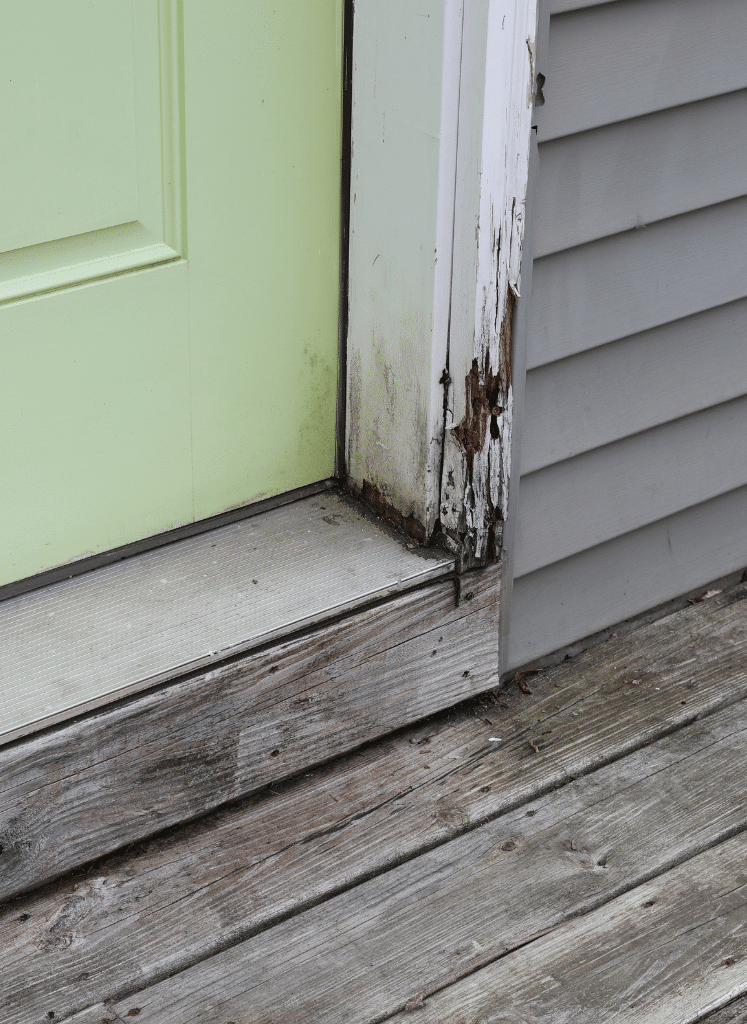
When we find wood rot around an exterior door, it is usually concentrated near the bottom of the jamb, trim, or threshold. That is not random. Water tends to collect in those lower corners, splash back from porches and landings, or get behind failed caulk and trim joints where the wood stays damp longer.
The visible soft spot is not always the whole repair. Once we open the area up, we may find damage extending into the brick mould, threshold, subfloor, or framing around the door. That is why we look for both the damaged wood and the reason it got wet in the first place.
If we replace rotten material without correcting the water path, there is a good chance the same problem will come back.
Why Exterior Door Frames Usually Rot at the Bottom
The bottom of an exterior door frame takes more moisture than almost any other part of the opening. Rain can hit the lower jamb directly, water can splash up from a porch or landing, and runoff can work its way into joints around the threshold and trim. Once moisture reaches the end grain of the wood, it can be absorbed and held there.
Paint and caulk help protect the frame, but they do not last forever. A small crack in a caulk joint or a section of peeling paint can expose raw wood to repeated wetting. In a shaded entry that dries slowly, that can eventually lead to decay.
We also look at the surface outside the door. If a porch, stoop, or landing directs water toward the opening instead of away from it, the lower jamb may be getting wet every time it rains. The frame can be repaired correctly and still fail again if the drainage problem outside is left alone.
Metro Atlanta’s rain, humidity, and long warm seasons can make these conditions more noticeable because exterior wood may go through repeated wetting and drying throughout the year. The issue is usually not one storm. It is what happens to the same area over and over.
A Small Rotten Spot Can Hide More Damage Behind the Trim
What you can see from the outside is only the exposed part of the door assembly.
The jamb is surrounded by exterior casing or brick mould, the threshold sits at the bottom of the opening, and there may be sheathing, subflooring, or wall framing immediately behind those materials. If water has been getting into that area for a long time, the deterioration may extend farther than the paint surface suggests.
This is why we are careful about giving a final repair recommendation before we know how deep the damage goes. A lower jamb can look bad while the surrounding structure is still solid. In another home, a relatively small soft spot may turn out to be the visible edge of a larger moisture problem.
Once we remove the damaged trim or jamb section, we want to reach sound wood. That tells us what can stay, what needs to be replaced, and whether the door itself can remain in place.
How We Repair a Rotted Exterior Door Frame
One of the easiest mistakes to make is judging the condition of the deck only by the boards you walk on. We sometimes see decks where the surface looks fairly good, but the framing underneath has been exposed to moisture for years. Newer boards may even have been installed over older framing.
The opposite can happen too. The deck boards may look weathered while the joists, beams, and posts are still in good condition. That is why visible appearance alone does not tell us whether repair is still practical. We want to know what condition the structure is in before recommending new decking or other surface work.
When Can We Repair the Frame Without Replacing the Door?
A rotted door frame does not always mean the entire door assembly has to come out.
If the door slab is still in good condition, the upper frame is solid, the threshold and subfloor are sound, and the deterioration is limited to part of the jamb or exterior trim, we can often repair the damaged section without replacing everything.
That is one of the reasons we separate the condition of the door from the condition of the frame. A homeowner may have a good door with localized wood rot around it. Replacing the whole prehung unit in that situation may be more work than the problem requires.
Replacement becomes more reasonable when the damage is widespread, the threshold is failing, the frame is badly distorted, the subfloor has been affected, or the door itself is already near the end of its useful life. We look at the whole opening before deciding which route makes sense.
Why Door Frame Rot Comes Back After It Has Been Patched
One of the most common reasons exterior wood rot returns is that the repair addressed the soft wood but not the moisture.
If someone fills the damaged area, paints over it, and leaves the same leak at the threshold or trim joint, water continues reaching the repair from behind or below. The surface may look good for a while, but the underlying condition has not changed.
We also see problems when damaged wood is not removed far enough. A new section needs to connect to sound material. Building a repair over wood that is already soft or deteriorated gives the new work a poor base.
The same applies to the exterior conditions around the door. If water still collects against the threshold, a landing slopes toward the house, or a failed joint keeps letting water behind the trim, the replacement material is being exposed to the same conditions that damaged the original frame.
If we replace a rotten jamb but leave water running into the same lower corner, we have not really fixed the problem.
What We Check Before Recommending Door Frame Repair
When we inspect wood rot around an exterior door, we are trying to understand how far the damage extends and what caused it.
| What We Check | Why It Matters |
|---|---|
| Bottom of the jamb | Common place for water to collect and wood to soften |
| Brick mould or exterior casing | Can hide deterioration behind the visible trim |
| Threshold | A failed joint can allow water into the lower frame |
| Subfloor | Shows whether moisture has moved into the structure |
| Door operation | Binding or shifting can point to broader frame damage |
| Caulk and paint | Failed protection can leave wood exposed |
| Porch or landing | Slope and splashback affect how much water reaches the frame |
| Surrounding framing | Helps determine whether damage extends beyond the door assembly |
We are not looking for one cosmetic flaw. We are trying to understand the relationship between the water, the damaged wood, and the structure around the opening.
That is what tells us whether the repair should be limited to a small section or expanded into a larger door or wood rot project.

Catching Door Frame Rot Early Usually Keeps the Repair Smaller
Exterior door frame rot usually gives some warning before it becomes a major repair. Peeling paint near the bottom of the jamb, cracking caulk, dark staining, swelling, soft wood, gaps near the threshold, or trim beginning to pull away are all worth taking a closer look at.
A door that starts sticking or no longer closes the way it used to can also be a clue. Sometimes that is a simple adjustment issue, but when it appears alongside visible rot, we want to see whether the lower frame has started to lose its shape or strength.
The earlier we can see the moisture path, the easier it is to determine what actually needs to be repaired. A localized jamb or trim repair is much simpler than waiting until moisture has spread into the subfloor or wall framing.
At The Trusted Toolbox, we handle both wood rot repair and exterior door repair, so we can look at the entire opening instead of treating the visible soft spot in isolation. If you are seeing rot around an exterior door in Metro Atlanta, we can determine where the water is getting in, how far the damage extends, and whether the frame can be repaired without replacing more than necessary.