

Is It Cheaper to Hire a Handyman for Several Small Repairs at Once?
A long home repair list can be frustrating because none of the individual jobs seem very large. You may have a loose railing, a sticking door, damaged trim, a drywall patch, a few deck boards that need attention, and several other small things that have been waiting for months.
In many cases, it can be more cost-effective to hire one handyman or home repair company to handle several of those items during the same visit. You are reducing the number of separate appointments, service calls, and setup time needed to get through the list. At The Trusted Toolbox, this is exactly the kind of situation where grouping repairs together can make sense.
Why Several Small Repairs Can Cost More When You Schedule Them Separately
Every home repair takes more than the few minutes spent making the actual fix. There is travel time, loading and unloading tools, setting up the work area, picking up materials, protecting nearby surfaces, and cleaning up afterward.
If you hire a contractor for one small repair today, another repair two weeks from now, and another one next month, some of that time gets repeated every visit. You may also have to take time off work, coordinate access to the house, and explain the project to several different people.
When several smaller repairs are grouped together, we can often move from one item to the next without starting the whole process over each time. That does not mean every project becomes inexpensive, but it can make the overall use of labor and time more efficient.
What Kinds of Repairs Can Be Grouped Together?
The best repair lists usually include a mix of smaller jobs that fall within the same general handyman or carpentry scope.
For example, a homeowner might ask us to take care of:
- A door that no longer latches correctly
- Damaged interior or exterior trim
- Small drywall repairs
- Loose railings
- Minor deck repairs
- Caulking around doors or windows
- Hardware replacement
- Small carpentry repairs
- Rotted exterior wood
- Shelving or other small installations
Handling several of those during the same project can be much simpler than finding a different contractor every time something breaks.
The key is making sure the items actually fit the type of work one contractor performs. Electrical, major plumbing, HVAC, roofing, or structural issues may still require a specialist.
Why Small Jobs Can Be Hard to Hire Out Individually
Homeowners sometimes have trouble finding contractors willing to take on very small projects. A large remodeling company may not want to schedule someone to fix one door or patch a small section of drywall. A specialty contractor may be willing to do it, but their minimum service charge may make a tiny project expensive compared with the amount of work involved.
That is one reason handyman services are useful. We are set up to handle a wider range of home repairs, so a group of unrelated but manageable projects can often be completed under one scope.
A list with eight small repairs may actually be a better fit for us than eight separate homeowners each calling about one small repair.
Does a Handyman Charge Less for Multiple Repairs?
Not necessarily in the sense of receiving a discount on every individual repair. The savings usually come from efficiency. We can spend more of the scheduled time working and less of it traveling, setting up, cleaning up, and coordinating separate appointments. Imagine two homeowners have the same five repairs.
| Approach | What Happens |
|---|---|
| Five separate appointments | Travel, setup, cleanup, and scheduling happen five times |
| One grouped repair visit | Travel and setup happen once, then work moves from item to item |
| Multiple specialty contractors | Different companies may each have their own minimum charge |
| One broad home repair contractor | Several compatible repairs may fit under one scope |
The actual price still depends on the repairs, materials, access, and how much labor each item requires. But grouping work can make the project more efficient overall.
When Does It Make Sense to Hire a Handyman for a Full Day?
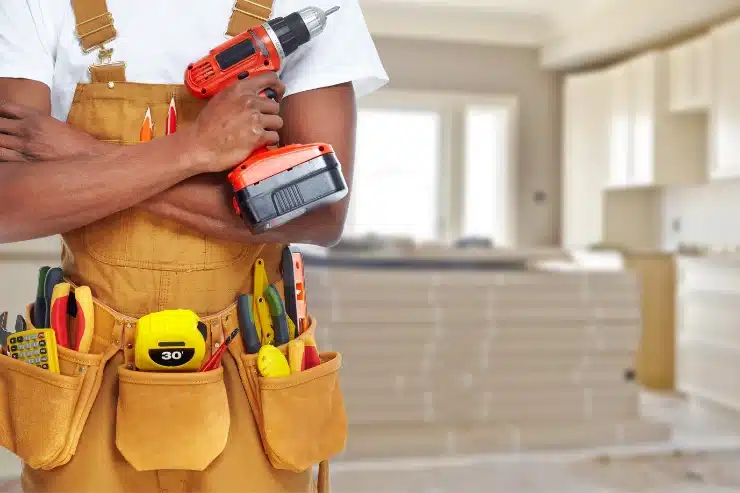
If your repair list has been building for a while, a larger block of handyman time may make more sense than scheduling one project at a time. We often recommend thinking about the house room by room or area by area. Walk through the home and write down the things that have been bothering you. Check the doors, trim, drywall, railings, exterior wood, decks, and other small repair areas.
You may be surprised by how quickly the list grows. A full-day or larger repair visit can be useful when there are enough items to keep our team working steadily. It also gives us a chance to handle related repairs while the right tools and materials are already on site.
What Can a Handyman Actually Get Done in One Day?
This depends heavily on the type of work. Adjusting a door may take much less time than repairing rotted exterior wood. A drywall repair may need drying time before it can be finished. A deck repair may reveal more damaged material once boards are removed. That is why we do not like to promise that a certain number of repairs will always fit into one day.
Instead, we look at the list and estimate what is realistic. Some homeowners may have ten very small items that fit together easily. Another homeowner may have four projects that require much more labor. The goal is to use the scheduled time well, not rush through the list just to check off more boxes.
Make a Repair List Before You Call
If you want to get the most value from a handyman visit, make a list before scheduling. Include the obvious repairs, but also think about the little things you have learned to live with. A door that needs to be lifted to latch, a loose piece of trim, a railing that wiggles slightly, or a drywall hole hidden behind furniture may all be worth adding.
Photos can also help us understand the scope before we arrive. The more information we have about the list, the easier it is to plan the visit and determine whether any materials should be picked up ahead of time.
We may also notice that one item should be handled by another trade. It is better to sort that out before the day of the project than after our team is already there.
Group Repairs That Require Similar Tools or Materials
One way to make a repair visit more efficient is to group similar work.
For example, if we are already repairing exterior trim, it may make sense to look at other wood rot or caulking problems around the house during the same visit. If we are repairing drywall, several small drywall problems may be easier to handle together.
The same applies to doors, deck repairs, hardware, and carpentry.
This does not mean the entire repair list has to be related. The advantage of a handyman service is that we can usually move between several types of work. But related items can sometimes make scheduling and material planning even easier.
There Are Times When Separate Projects Make More Sense
Combining repairs is not always the best choice. A small drywall patch can usually wait while you build a longer list. An active water leak should not. The same is true for safety issues, serious wood rot, structural concerns, or anything that could cause more damage if it is delayed.
We would not recommend waiting six months to bundle an urgent repair just because you want to save on a future service visit. A practical rule is to separate the list into two groups:
Fix now: safety concerns, active leaks, worsening damage, or repairs affecting how the home functions.
Bundle later: cosmetic work, small adjustments, minor trim repairs, and other problems that are not getting worse quickly.
What We See Most Often in Metro Atlanta Homes
A lot of homeowners do not have one major repair problem. They have ten small ones. We regularly see exterior trim that needs attention, doors that have shifted, small drywall damage, loose railings, deck repairs, failed caulk, and other maintenance items on the same property. Georgia heat, humidity, rain, and everyday wear all take a toll on different parts of a home over time.
Most of those problems are easier to deal with when they are still small. A loose board or damaged piece of trim is usually simpler to repair before water, rot, or continued movement causes additional damage.
Grouping those repairs together can help homeowners catch up on maintenance without turning every small issue into its own project.
Is It Cheaper to Hire a Handyman for Several Repairs at Once?
Often, yes. You are not necessarily paying less for the actual repair itself, but you may be getting more useful work out of the time you are paying for. One scheduled visit can replace several smaller appointments, reduce repeated service time, and make it easier to work through a long home repair list.
That is especially useful when the projects involve a mix of carpentry, drywall, doors, trim, deck repairs, wood rot, and other general home maintenance.
Have a List of Small Repairs? Send It to Us
If your home has reached the point where the repair list keeps getting longer, you do not have to schedule each item separately.
Our team at The Trusted Toolbox can review the list, help you figure out which repairs can be grouped together, and identify anything that should go to a specialty contractor instead. We can then build a practical scope around the work that makes sense to complete during the same visit.
If you are in Metro Atlanta and have several small home repairs you have been putting off, send us your list or photos of the problem areas. We will help you turn those scattered projects into a manageable repair plan.